martes, 9 de junio de 2009

THE BAAL SHEM TOV

THE BAAL SHEM TOV


Israel Ben Eliezer (ca. 1698, Okopy Swietej Trójcy - May 22, 1760, Medzhybizh) Founder of Hassidic Judaism.


Great mystic, known as "the Holy Ba'al Shem" (der Heiliger Baal Shem in Yiddish), or more commonly, Baal Shem Tov or Basht. Ba'al Shem Tov's name is translated as the Master of the Divine Name. At school, was distinguished by his frequent disappearances, was always found in the forests surrounding the place, enthusiastically enjoying the beauties of nature. Many of his disciples believe that he comes from the line David.


JAI ELUL 18 ELUL (HEBREW MONTH)


"Jai Elul - 18 Elul - is the most significant date in the calendar Hassidic. The founder of the Hassidic, Rabbi Israel Baal Shem Tov, was born on this date in 1698. That same day, 36 years later, the Baal Shem Tov began to publicly disseminate his teachings, after many years of belonging to the "hidden tzadikim" during which he lived disguised as a simple innkeeper and clay-gatherer, his greatness was known only to a very small circle of fellow mystics and disciples. Elul 18 is also the day he is born - in 1745 - Rabi Schneur Zalman of Liadi, often known as the grandson "spiritual" the Baal Shem Tov.


There were other mystics before the Baal Shem Tov who dealt with the simple folk. But for them life was a dichotomy: The study of the work was a mystical world and its relations with other people was simple-a world affected by its mysticism, but very, very distant from it.

The Baal Shem Tov said: "These are not two worlds. They are intimately connected.'s Kabbalah Ari has so much to do with the ascetic with the simple innkeeper or farmer seed potatoes, which are used to di-s with all his heart . In fact, the simple Jew, the great simplicity of the Infinite Light shines best "


A letter from Rabbi Israel Baal Shem Tov to his brother-in law of Kitov Rabbi Guershon

Rosh Hashanah in the year 5507 (1746 CE) made a lifting of the soul by means of a promise, as you know, and I saw wonderful things he had never seen before.

It is impossible to describe in words what I saw and learned, even face to face ... Ascended from level on level, until they entered the chamber Mashiaj, where he studied Torah with all Tanaim and tzadikim and even with the Seven Shepherds (Abraham, Yitzhak, Iaakov, Moshe, Aharon, David and Shlomo) ... Mashiaj I asked, "When will you come, master?" And he answered, "So what you know: When your teachings will be made public and revealed in the world, and your sources spilled out toward the far end, where I have taught you and your comprehendido and even they will be able to perform unifications and elevations as you, then they will cease to exist all kelipot or "shells", and will be a time of goodwill and salvation.

" I was surprised with great distress, to think about all the time remaining for that to happen, when will be? But what I learned there, three practice and three powerful Sacred Names, simple to learn and explain my mind calmed down and thought that it is possible that through this, men of my nature to be able to reach levels similar to mine ... But I was not allowed to reveal this in my entire life ... But I can tell you this, and want to help God: your way is always in the presence of God and should always be aware of your prayer time and study.

That every word from your lips tend to unity, because each letter must Worlds, Souls and Divinity, and amount and they are connected and unified with each other, then the letters are connected and unified to become words, and (then ) are unified in true union in the Divinity. Fill your soul with them in any occasion.


Personal Opinion

THE BAAL Shem Tov undoubtedly taught us that the essence of a Jew does not depend on their knowledge or their material possessions or even their Spiritual abilitys". BUT THE SIMPLE ESSENCE OF ITS THAT ARE UNITED WITH THE CREATOR.

In my humble opinion I guess that's why he liked to Help every Jew and Jew, because he focused on its essence , it is interesting to see that for oneself on the people, only if we break all the "klipas" (Shells) we would be able to see THE SIMILARITIES THAT WE HAVE. AND FOR SURE THAT WE HAVE... A SPECIAL PLACE THAT IS WHERE THAT IS OPENLY MANIFESTED IS IN JERUSALEM amd more especific at the Kotel (Western Wall) where people that never met before (at least in this life) Gather to pray, talk, etc, thereyou may see THE ESSENCE OF A SIMPLE JEW, wehre all become one (malchut of Atzilut- Rachel (mistic concept). That kind of Experiences bring me Shalom.

THE EXILE IN EGIPT


1. When Joseph was known to his brothers, he said: "G-D sent me before you proportional to survival on earth, to hold them so special, then, were not you who sent me here, but G-D The governor put me throughout Egypt "[ie, I wanted to], that were not [them], their brothers, which sent him to Egypt, but the Most High, and he became the ruler of all Egyptian territory to Iaakov and their children can survive the years of famine. And [therefore Joseph] were ordered to report immediately to [her father] Iaakov: "G-D appointed me master of all Egypt," therefore "falls to me, do not be influenced" [Joseph wanted] to Iaakov and his family do not stop, which immediately fall to his meeting in Egypt.

It means that the drop Iaakov and his sons into exile - Egyptian galut depended on Joseph became the ruler of all the Egyptian territory. That is, Joseph was not just telling them how the Divine Providence that led to its sale [slave] was the cause of the arrival of them to Egypt, but also alluded to the fact that how by God it became to him the ruler of Egypt, made possible the 'down ...' so that the conditions to carry out the purpose [Divine interior and] deep galut Egyptian, were already given.

2. The explanation of the concept is simple: When God, the Covenant between the parties, we informed our Patriarch Avraham that his children would go into exile (Egyptian), He said: "... and then leave with great wealth." The meaning of this promise is not only a kind of reward because 'The enslaved and made to suffer', but it goes beyond the exodus of Jews from Egypt with 'rich' is the divine purpose and intention after having led galut to Egypt.


Evidence for this assertion is the following: One of the razones3 by the Almighty to bring the Egyptians to the Plague of Darkness was for the Jews in those times of darkness, to seek and find the most valuable objects of the Egyptians and thus, could obey the order Divina4 "that prompted each man to his neighbor and each woman to her neighbor, jewels of silver and gold jewelry, for which thus reflects the '... and then leave with great wealth '-' not to say that tzadik' our Patriarch Abraham, who ran to god' The enslaved and made to suffer ', but did not comply with [his promise]' Then come with great wealth '.

This simple view must be understood: when the person is in galut, particularly if it is a hard and bitter exile, as was the Egyptian certainly abandon any gain as long as the galut released immediately. In this sense, the Guem señala6 that (listening to the Divine order "Let every man ask for ... '), the Jews argued:" I hope that we get out of Egypt. Guem And continues with the analogy of a person being in prison some dam known him say, 'you're free tomorrow and give you lots of money. What [the captive] answered them: 'I ask you to release me today, and intend to give me nothing'. So, How is it possible that GH-D has long held the Jews in exile in order to comply with [the promise] 'leave with great wealth? Also the reason set out by the Guem - 'not to say that tzadik' is baffling, because for sure our Patriarch Abraham had renounced the' rich 'as long as their children leave the galut sooner.

Therefore, we must inevitably conclude that if not for the wealth that accompanied the exodus of Jews in Egypt had not been translated the Divine purpose and intent of their arrival at galut Egyptian exile since the purpose was - 'Then come with great wealth . And to find expression for this project [Divine], first of Joseph had become the ruler of all the Egyptian territory, it was through [the power and hence the] ability to gather under him all the wealth of countries, [as is the Book] 'Joseph and collected all the money' - [Guem said that the verse refers to] ', all silver and gold in the world and then was able to materialize the' After come with great wealth.

3. The decline in Egypt had a goal to refine and elevate the level of holiness-the-kedushá 'sparks' [of God] in that country. Through its work over the years who resided there, the Jews managed to collect and refine the divine 'sparks' in Egypt, so that when the flight reached the 'spark' to your spiritual source and root, according what Scripture says in relation to [one aspect of] the Exodus: "Also, a multitude of various origins-Erev Rav-out with them." [The numerical value of Hebrew letters of the word Rav equals 202], thus elevating 202 'sparks' Divine were interspersed within the Egyptian.


These 'sparks' were in [the objects that make up] the great wealth which led the Jews from Egypt. About our Sages said: "Torah is the mercy of the money of the Jews" and that Iaakov is pity of 'small henos'11, Baal Shem Tov12 explained that the property of the Jews [to Di-s] very prized because they are 'sparks' Divine to be to refine and elevate the level of holiness. For this reason it was essential that 'A woman ask your neighbor ...'13, the purpose was to raise the' sparks' in 'the silver and gold utensils and clothing.

4. The realization of this ideal was for the good of the People of Israel. Therefore, our Patriarch Avraham sought to clarify that the Dis' Then come with great wealth ', even if it was subject to the time factor, because [I knew] was for the sake of their children. The explanation of the concept is: the system of refining [and lift] of 'sparks' of holiness and link them with the souls of Jews was established by [Di-s] so that and for every' Sparks' set [in advance] will be high for those who also was appointed, [from the top] for every soul that 'spark' will increase, as each 'spark' is linked to a soul in particular. This concept is reflected in our teaching sages 'no person' plays' what is already destined for his neighbor, "can not be enriched by what belongs to another - and [for sure] is because physically that in the spiritual governing these codes, ([parallel understood] as explained before, that the spiritual gain 'Chip' Divine-are present on the property of the person).


Every soul has a mission to raise certain 'spark' to it under its essence [Root and spiritual (the soul).] In this connection, explained in the notes of my stepfather, the Rebe [earlier], that the Almighty is the one who caused the causes through His Divine Providence, to be given to certain Jew 'spark' that he is raising . And every time he does not refine and raise the galut the 'sparks' attached to his soul, his soul will be in place of the' spark '- both remain in the galut.

What's more, the elevation of the 'spark' is linked to the essential characteristic of the soul of each. Thus, taking into account the [axiom] that 'the essence is not divided', since a portion of 'Sparks', however tiny it is, that [a certain soul] remains in its rightful increasing galut, endures galut also not only a fraction of his soul (along with that portion of 'Sparks' rest), but also the essence of the soul, [she continues in a state of exile]. This concept is of utmost Tov16 of the Baal Shem, "When you take a part of the essence, it takes the whole." For that reason, the removal of the 'wealth' of Egyptian territory was for the sake of the benefit of the Jews, because by bringing together and enhancing the 'sparks' of holiness of Egypt, their souls were redeemed from Egyptian galut. Also, (and as a fundamental aspect): the highest integrity, [and spiritual perfection] to which one can be created is to give effect to the Will of the Creator, for this purpose [precisely] The creó17. And because the Will of Di-s was that the Jews carry all 'Sparks' of holiness in Egypt, the materialization of the Divine I was for them to maximize profits, by this means attaining the [spiritual] more excelsa [to which one can be created].

5. The above in relation to the Egyptian exile and exodus represents a training and education to be implemented in the latter galut, since the root is the Egyptian galut [spiritual] diásporas18 all. The intention [Divine] exile [Jew] does not translate simply as a punishment for sins and transgressions, rather, is the rise of 'sparks' of holiness [in the field]. In this sense, the Hassidic philosophy explains the maximum of our Sabios19: "Di-s exiled [and spread] the Jews among the nations with the sole purpose of having them join them 'Guerima" [lit.' Converts ', but taking a broader and deeper interpretation of the concept,' Guerima 'is here] refers to the "sparks" of holiness in material objects. For this reason, it should be remembered that the avodá, service to Di-s, should be directed to: "a woman to ask her neighbor and to stay at home ',' woman 'refers to alma20, Di - s tells the soul that she must not only leave the exile, but also 'to ask your neighbor,' [is] the soul has to carry the "sparks" of holiness that are in the animal body and soul and its portion of the world.

'Neighbor' refers to issues with which the individual faces from time to time (like a neighbor who is not continuously), 'who dwell in the home', refers to cases with that deal frequently (and with someone who lives in the same house). The order of Di-s does not point only to make the imperative of galut the 'spark' with which we have frequent contact, [those questions ( 'which reside in the house')], rather it is increasing even 'sparks' in sporadic contact, (for if the person is faced with someone or something, is not a fortuitous veshalom jas, s-Di-us free to think so, but is under the fire of Divine Providence 'There is One who leads the mundo'21, [then], from the top you have all the individual things and situations that will refine and elevate to sainthood), and the aim is to transform [the objects and situations with those encountered] in 'gold and silver utensils,' [that is] which are part and included in the avodá concerning love Di-s (compared to the 'silver') and fear of Dis (compared to gold).

6. There are those who argue: "What relation do I have to galut! Why do I have to deal with issues related to galut? I forgive and forgo the 'rich', the supreme spirituality to which access through my soul increasing the 'spark', as long as you do not have to push in galut [me and immersed] in the dark double and redouble [feature itself and the state of spiritual exile], interfered in matters material, I wish, and is better for me, locked in my 'four walls' of Torah and prayer. " It is imperative that they know: A) When the avodá for them is not completed, his soul remains in the galut. The 'lock' to study Torah and pray without any contact with the galut affects [and benefits] only obvious forces of the soul, [the intellect and emotions], but the essence of the soul still remains in exile along with ' Sparks' which will be lifted. Well the fact that the forces of the soul are manifest at the level of sanctity, no evidence [that] the situation of esencia22 [is so]. Just a mere reflection of these concepts, take the person to perform your service avodat habirurím-Di-s aimed at raising the 'chispas', because [according to its nature]' the man will give what he has in for their alma'23, and with good reason as it is the essence of his soul.

B) Even if it were possible to leave the galut and access lofty spiritual levels without having to do what you are concerned about the rise of 'sparks', what it is all his spirituality, and what we talk about spirituality ? If after everything is done against the will of Almighty, and 'Will and His Will are uno'24. And this is [just] the lesson of what happened in the Egyptian exile and exodus: the avodá Jew must include involvement in worldly matters, raising the 'sparks' in the galut, and march with them to the reception Mashíaj of Tzidkeinu soon [today] in its most literal sense. (One of Sijá of Ajarón Shel Pesach 5721.

martes, 19 de mayo de 2009

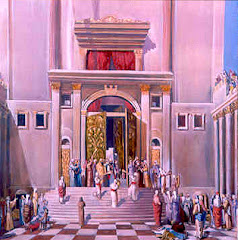
El Beit Hamikdash en su gloria


El Beit Hamikdash en su gloria


El Beit Hamikdash era la sagrada morada de Hashem. ¡Qué halo providencial reinaba entre el pueblo de Israel y el Creador del Universo! ¡Cuánta santidad y belleza habla en esa espléndida mansión!Ciertamente, durante los días en que el Beit Hamikdash existía, no había en todo el mundo una construcción tan extraordinaria como ésta, construida con grandes y pesadas piedras, acomodadas de modo excepcional. Algunas estaban recubiertas con un mármol verde azulado, similar al oleaje marino, lo que transmitía paz al observador.Todos los portones del Beit Hamikdash estaban hechos de oro puro, lo mismo que la mayoría de los utensilios utilizados en el Templo. Allí había miles de candelabros decorados con flores y botones de oro, y al ser encendidos, el Beit Hamikdash quedaba inmerso en un mar de luz.


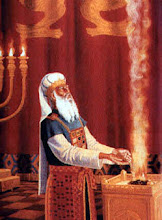
El Templo se encontraba dividido en dos grandes partes: el hall del Templo -heijal- y el patio del Templo (azara). En el hall estaban dispuestos tres de los más importantes utensilios del Templo. En el sector sur se ubicaba la menorá de oro, compuesta de siete brazos; en el sector norte se ubicaba la mesa del lejem hapanim (mesa con la ofrenda del pan), y en el centro del hall, se erigía el altar de oro, utilizado para los inciensos. En el extremo del hall había otra habitación: el Kodesh Hakodashim, el sitio de máxima santidad del Templo. Dos cortinas adornadas con hilos de oro cubrían su entrada y lo separaban del hall. Mas nadie corría estas cortinas ni ingresaba al Kodesh Hakodashim, salvo el Gran Sacerdote, una vez al año: el día de Yom Kipur.


¿Qué había en el Kodesh Hakodashim?En este sagrado lugar se encontraba el arca que guardaba en su interior los Diez Mandamientos. El arca poseía una cobertura de oro, y sobre la misma había dos querubines de oro puro. Los querubines extendían sus alas una sobre otra simbolizando el amor de Hashem por Israel.El Segundo Templo ya no contaba con el arca y en su lugar se encontraba la "piedra fundamental" -even hashtia- llamada de este modo porque a partir de ella se creó el mundo. Desde el hall del Templo, doce escalones conducían al patio de los sacerdotes. Se trataba de un patio de grandes dimensiones en el que se encontraba el altar de cobre, denominado también altar externo. Sobre este gran altar se ofrecían la mayoría de los sacrificios del Beit Hamikdash.Otro importante utensilio del Templo se encontraba en el patio de los sacerdotes. Se trataba del lavabo -kior- de cobre brillante en el que los sacerdotes lavaban sus manos y sus pies antes de prestar su servicio en el Templo.


Cerca del patio de los sacerdotes se encontraba el patio de los israelitas. En este inmenso patio se concentraba todo el. pueblo de Israel que peregrinaba a Jerusalén y acudía al Templo para rezar y ofrecer sus sacrificios. Y aunque esta masa humana era muy numerosa, llegando a miles de personas, de todos modos el patio los contenta. Inclusive un milagro solía producirse: "El pueblo se encontraba amontonado mas se arrodillaban holgadamente".En la esquina del patio de los israelitas se abría una habitación de suma significación denominada Lishkat Hagazit. Alli se reunía el Sanhedrín para juzgar casos monetarios y casos de vida y muerte, resolviendo todos los conflictos del pueblo. También en la Lishkat Hagazit se aclaraban y se enseñaban las leyes de la Torá. De este modo, el peregrinaje a Jerusalén representaba una oportunidad estupenda para que el pueblo estudiara Tora. Al regresar a sus hogares llevaban consigo las enseñanzas de los sabios. De este modo cumplían el versículo que enseña: "Porque de Tzión saldrá la Torá y de Jerusalén la palabra de Hashem".

Cercano al patio de los israelitas se ubicaba otra extensión de grandes dimensiones: el patio de mujeres. Allí se reunían las mujeres y las niñas separadas de los hombres, a fin de cumplir estrictamente las normas de recato. Quince escalones separaban el patio de las mujeres del patio de los israelitas. En cada escalón se ubicaban los levitas y entonaban los quince cánticos graduales del Libro de los Salmos: Tehilim. Los levitas cantaban con afinadas voces y acompañaban sus cánticos, con arpas, flautas y címbalos. Sus maravillosas melodías alegraban los corazones y colmaban de felicidad a quienes ascendían a Jerusalén.

Al comienzo de la escalera habla una magnífica puerta -La Puerta de Nikanor- por la que se ingresaba en el patio de las mujeres. ¿Por qué era llamada de este modo? Esto lo relatan nuestros sabios en el Tratado de Yomá.


Un hombre judío llamado Nikanor deseaba entregar una donación al Beit Hamikdash. Se dirigió a Alejandria, en Egipto, y alli hizo preparar por expertos artesanos dos bellas puertas de cobre para el Templo. Las cargó sobre el barco con la intención de transportarlas hasta la Tierra de Israel. Durante el viaje una fuerte tormenta azotó la embarcación hasta el punto que la nave estaba a punto de quebrarse. Los marineros y el capitán del barco pensaron de qué modo alivianar la carga, y al observar las pesadas puertas de cobre, tomaron una y la arrojaron al mar.

Sin embargo las aguas no calmaron su furia. Mas al pretender arrojar la segunda puerta, Nikanor se amarró a la misma y. exclamó: "¡Arrójenme con ella!". De pronto el mar se calmó y no hubo necesidad de arrojarlo. Un gran pesar invadió a Nikanor por la primera puerta, mas algo maravilloso sucedió. Cuando el barco arribó al puerto de Ako, observaron que la puerta arrojada al mar se encontraba debajo de la embarcación. De este modo mereció Nikanor que un milagro sucediera gracias a su total disposición y entrega en beneficio del Templo. Las puertas fueron dispuestas en el Templo y denominadas "La puerta de Nikanor".


Mas no fue éste el único milagro acontecido en beneficio del Templo. En el Tratado de Avot, nuestros sabios relatan otros milagros sucedidos en el Beit Hamikdash:1)A pesar de la gran cantidad de carne ofrecida en sacrificio, jamás hedió, como así tampoco se vio una mosca en el sitio donde se degollaban los sacrificios. 2)El fuego en el que se quemaban los sacrificios era encendido en un sitio abierto, y sin embargo jamás las lluvias lo apagaron.3)La columna de humo que ascendía de los sacrificios no era llevada por el viento ni inclinada en dirección alguna. Por el contrario, siempre subía de modo recto hasta el cielo.4)Jamás se encontró defecto que descalificara la ofrenda del omer, la ofrenda de los panes de la fiesta de Shavuot o la de los panes de proposición. Igualmente, el pan de la proposición nunca fue descubierto seco sino siempre fresco como el día de su horneado.5)Jamás una serpiente o escorpión dañó a una persona en Jerusalén, y nunca se dio el caso de que un hombre se quejara diciendo que era estrecho el sitio donde pernoctara en Jerusalén.


Hashem efectuaba milagros en el Templo y de este modo demostraba su afecto por Israel. La Providencia moraba sobre el Templo, otorgándole una inigualable belleza lo mismo que una impresionante santidad interna. La belleza del Templo también atraía a los habitantes de otras naciones, quienes al observarlo no cabían de asombro.


(selección extraída del libro "Jerusalem de Oro", © Ed. Jerusalem de México)


lunes, 9 de marzo de 2009

ANALIZANDO PURIM, 5769¡¡


Aqui les dejo un video sobre purim...


http://eduplanet.net/course/view.php?id=122


y para los que gustan de profundizar un poquito les dejo esta lectura, sobre Adar y Purim, shalom.


El Mes de Adar por el Rabino Itzjak Guinsburgh

De acuerdo al Sefer Ietziráh, cada mes del año judío posee una letra del alfabeto judío, un signo del zodiaco, una de las doce tribus de Israel, uno de los sentidos y uno de los miembros del cuerpo que le corresponden.


Adar es el doceavo mes del calendario judío.

La palabra Adar es afín (tiene su raíz) en la palabra adir , que significa “poderoso“. Adar es el mes de la buena fortuna para el pueblo judío. Nuestros sabios dicen de Adar: “Su mazal (fortuna) es fuerte “.

Purim, la festividad de Adar, conmemora la “metamorfosis” de la aparente mala fortuna de los hebreos (como le pareció a Haman), en buena. “Cuando Adar llega incrementamos nuestra alegría”. La fiesta de purim marca el punto de máxima alegría del año entero. El año judío comienza con la alegría de la redención de Pesaj y concluye con la alegría de la redención de Purim. “La alegría rompe todas las barreras”.

La alegría de Adar lo hace el mes de “gestación ” del año (siete de los diecinueve años del ciclo del calendario judío son “bisiestos”, (gestando un mes de Adar adicional). Cuando hay dos Adar, Purim es celebrado en el segundo de ellos, de manera tal que une la redención de Purim con la de Pesaj. Por lo tanto vemos que el secreto de Adar y Purim es que “el fin está insertado en el e el comienzo “.


• Letra: KUF

La letra kuf significa “mono “( kof ), el símbolo de la risa del mes de Adar, según el dicho “como un mono en la cara de un hombre “. La kuf también simboliza la máscara, un disfraz adaptado por Purim. Antes del milagro de Purim, Hashem mismo “ocultó Su rostro” de Sus hijos de Israel (en toda la historia de Purim, como está relatada en el libro de Esther, su nombre no aparece nunca). Escondiendo inicialmente la verdadera identidad, pretendiendo ser otro, la esencia interior de uno es finalmente revelada. Durante Purim alcanzamos el nivel de “cabeza incognoscible” (“la cabeza que no se conoce a si misma y no es conocida por otros”). El estado de total ocultamiento existencial de y hacia si mismo, por la gracia de “dar nacimiento” a un ser completamente nuevo.

La palabra kuf también significa “el ojo de la aguja “. Enseñan nuestros sabios que incluso en el sueño más irracional uno no puede ver pasar un elefante por el ojo de una aguja. Durante Purim uno experimenta esta gran maravilla, que Cabaláh y Jasidut representa la verdadera esencia de la luz trascendental de Hashem entrando dentro del contexto finito de la realidad física y revelándola completamente dentro del alma judía.


• Mazal: Daguim (Piscis – Pez).

Los peces son criaturas del “mundo oculto” (el mar). Así son las almas de Israel, “peces” que nadan en las aguas de la Toráh. La verdadera identidad y fortuna de Israel es invisible en este mundo. La revelación de Purim, la revelación de la verdadera identidad de Israel, refleja la revelación del mundo por venir (el milagro de Purim es comprendido como un reflejo en este mundo del supremo milagro: La resurrección en el mundo por venir).

La palabra dag (el singular de daguim ) es interpretada como la representación del tikún (rectificación) de daag “preocuparse”. En la Biblia, la palabra para pez – dag – aparece una vez como daag : En los tiempos de Nejemiah algunos judíos no observantes violaban la santidad del Shabat vendiendo peces (pescados) en el mercado de Jerusalem. Sus “peces” se volvieron su “preocupación” para obtener un medio de vida. Por el contrario el pez de la alegría de Purim, el poderoso (aunque inicialmente escondido, como el pez) mazal de Adar, convierte todos los problemas dentro del corazón del hombre en la suprema alegría de la redención con el nuevo nacimiento de un ser desde la “cabeza incognoscible “.


• Tribu: Naftali

En la cabala, el nombre Naftali es leído (como dos palabras): Nofet li , “dulzura para mi”. La mitzváh de Purim de alcanzar el nivel de la “cabeza incognoscible" tomando vino, etc. esta expresada en las palabras de nuestros sabios como: “uno esta obligado en Purim a tornarse “dulce” hasta que no sea capaz de diferenciar entre “maldito Haman” y “bendito Mordejai”.

Esta es la expresión de alegría y risa a nivel de Naftali – nofet li.
Nuestro patriarca Iaacov bendijo a su hijo Naftali “Naftalí es un ciervo (mensajero), quien da (expresa) palabras elocuentes “. Las “palabras elocuentes “de Naftali elevan la alegría y la risa en los oídos de todos los que las oyen. Al final de la Toráh, Moshéh bendice a Naftali: “El deseo de Naftali esta satisfecho...”. En jasidut se explica que el “deseo satisfecho” ( seva ratzón ) se refiere al nivel de voluntad de la dimensión interior de Keter, donde toda experiencia es puro placer, el estado de ser donde no hay nada fuera de uno mismo.


Las tres letras que componen el nombre Haman poseen seis permutaciones. Haman = 95; y 6 x 95 = 570 = rashá (malvado), Por esta razón Haman es llamado “Haman el rashá”. 570 = Naftalí, quien toma la alegría y la risa jugando el juego de las seis permutaciones de Haman. En la Cabaláh está explicado que la “elocuencia” de Naftalí refleja su sabiduría para permutar palabras (así como examinar guematriot , como ser arur Haman [maldito sea Haman] = 502 = baruj mordejai [“bendito sea Mordejai“], generalmente el más “delicioso juego ( shaashúa ) en el estudio de la Toráh.


Como explicáramos previamente, los meses de Tishrei y Jeshvan corresponden (de acuerdo al Arizal) a las tribus de Efraim y Menashéh, los dos hijos de Iosef. Iaacob bendijo a sus dos nietos Efraim y Menashéh para ser como peces: “y ellos serán como peces en medio de la Tierra“. Estas dos tribus (al comienzo del año desde Tishrei) se reflejan así mismas en Adar y Naftali (el fin del año desde Nissan, Adar se divide en dos (así como Iosef se divide en dos) peces (Efraim y Menashéh). El soporte numérico para esto es que cuando Efraim (331) y Menashéh (395) se combinan con Naftali (570): 331 más 395 más 570 = 1296 = 36 al cuadrado = 6 a la cuarta potencia.

• Sentido: Risa – tzjok

La risa es la expresión de alegría ilimitada, que resulta de ser testigo de la emisión de luz desde la oscuridad -la ventaja de la luz sobre la oscuridad– como se observa en el milagro de Purim. El epítome de la risa en la Toráh es la de Sarah acerca del nacimiento de Itzjak (nombre que deriva de la palabra tzjok ): “Hashem me hizo reír, quien quiera que oiga reirá conmigo”. Pariendo a la edad de 90 años (con Abraham de 100), luego de haber sido estéril y físicamente imposibilitada para tener niños, la palabra en hebreo para “estéril” esta compuesta de las mismas letras (en el mismo orden) que la palabra “oscuridad“. Purim proviene de la palabra pru, “fructificad y multiplicaos“. Está dicho de Itzjak, el personaje arquetípico de la risa en la Toráh: pajad Itzjak , “el temor [por la causa de la admiración, es decir, Hashem] de Itzjak”. Esta frase puede ser leída también como: “El temor reirá”, de manera tal que la esencia del temor se metarfoseará en la esencia de Purim. El temor de (el decreto de) Haman se transformará en la exhuberante risa del festival de Purim.

• Miembro : Bazo ( Tejol )


Nuestros sabios establecen explícitamente que “El bazo ríe“. A primera vista, esto aparece como una paradoja dado que el bazo es considerado el asiento del “humor negro”, la fuente de todos los estados de depresión y desesperanza. Así como describimos anteriormente, todos los fenómenos de Adar y Purim son esencialmente paradojales, todos ellos derivando de la “cabeza incognoscible “, y todos ellos representan estados de transformación y metamorfosis existenciales. La “metodología" de la Toráh que “modela” estos fenómenos es la sabiduría de la permutación, como esta descripta arriba. Con respecto al “humor negro“, maráh shejoráh , todas sus letras se permutan para pronunciar “ hirur sameaj ”, “un pensamiento feliz”.


JAG SAMEAJ A TODOS¡¡

TE INVITO A ESCUCHAR BUENA MUSICA MIENTRAS ESTAS EN EL BLOG DEL SHALOM